History
The game basically originates from a primitive game invented in the seventeenth century by Blaise Pascal. His idea was to create a perpetual motion machine that would stopplessly provide free everlasting energy. That’s basically how the French roulette wheel was invented shortly after that, precisely in 1720.
Another hypothesis concerning how the game was invented is attributed to the French and Italian “cheating game” Biribi, which is also known as a game of luck that is similar by its nature to low bets lotto and lottery.
Regarding the first references of French roulette, there can also be the legal regulations adopted in 1758 in Québec or New France that imposed a ban of “dice, hoca, faro, and roulette”. That’s why we can suppose that French roulette already existed in the early eighteenth century and it may well have existed even before.
According to the official records, French roulette was first played in Paris, in the Palais Royal. It happened in 1796.
In 1801, the game was described by a French writer Jaques Lablee in his novel “La Roulette, ou le Jour” that was published in the same year. Here’s what he wrote about the game: “There are exactly two slots reserved for the bank, whence it derives its sole mathematical advantage” and the layout “two betting spaces containing the bank’s two numbers, zero and double zero”. Based on the way he described the game, we can understand that it was quite similar to the modern American version since it has two zero pockets with a single and double zero.
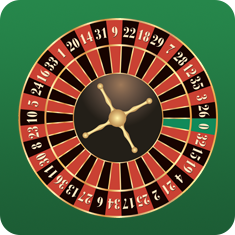
On the original French roulette wheel, there was a red single zero pocket and black double zero pocket. As you might have known already, nowadays zero pockets are green. Zero pockets were recolored because of the confusion since zero pocket results in a loss, while both red and black pockets can grant you victory. That’s why there was a need to solve this problem by recoloring zero pockets into green ones.
The modern French roulette was introduced in 1843 when famous gambling brothers François and Louis Blanc invented a single zero wheel. The first time a single zero roulette was played in Bad Homburg, which is a German casino. Since then, it has become popular in all the casinos across Europe and the world except for the American roulette where the double zero pocket remained. Basically, it was in 1843 when the French wheel was adjusted to the way it looks now.
French roulette gained its popularity right after the French Revolution. Since then it had been played in all French gambling houses and started spreading first across Europe and then across the world. Since the early nineteenth century, French roulette has become a popular casino game across the world.
How to play?
- Place a bet on the table layout;
- Make announced bets by placing enough chips on the table to cover the wager;
- Choose either the full/maximum or full/complete bet. Keep in mind there can be twelve bets in one. Mind that’s the last chance to place a bet since your bets can be overruled in case you don’t place them on time;
- Wait for the croupier saying ‘No More Bets’, spinning the wheel and dropping the ball on the wheel;
- When the ball finally falls into a certain number pocket, the winning bets are determined. Losing bets are collected by the croupier. Winning bets remain on the table.
- Winning bets get paid. Mind that there are really many winning combinations in French roulette, so you have a really high chance to get payments!
- Once all the winning bets are paid, you can start it over again.
Mind there are a few rules that are typical only for French roulette:
- En Prison comes into effect when the ball falls on the zero pocket and your bet is placed either on color or even or odd number. Using this rule, the stake can be left on the table for the next spin. However, your stake must be returned if the ball falls in the slot that you’ve predicted correctly.
- La Partage is the rule that is extremely similar to En Prison. If the ball falls on the zero pocket and you’ve placed a bet on even numbers, you can get back half of your stake.
Bets types
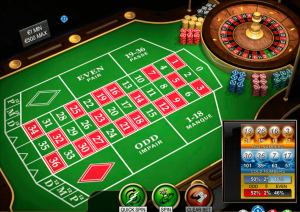
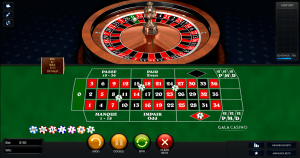
There are two main types of bets in French roulette, which are inside and outside bets. Inside bets are usually paid more than outside because they have less winning probability. Below you can check different types of both inside and outside bets along with their descriptions.
Inside bets:
- En plein is placed directly on any single number including a zero pocket;
- En Chaval features two adjacent numbers, is placed on the line between them, including a zero pocket;
- Carre Simple or Transversale features three numbers in a row, is placed on the line at the end of the row;
- Carre features four numbers, is placed at the corner where these four numbers touch;
- Sixain features six numbers or two rows of three numbers, is placed either at the end of two rows or on the border between them.
Outside bets:
- Colonne features an entire column, is placed on the 2-1 box at the end of the selected column;
- Dozen Bet features 12 numbers group, is placed on the first with number pockets from 1 to 12 (Premiere Douzaine), on the second box with number pockets from 13 to 24 (Moyenne Douzaine), or the third box with number pockets from 25 to 36 (Dernier Douzaine);
- Bet on Color (Rouge or Noir) features either all red numbers or all black numbers, is placed either on the red or black box respectively;
- Odd (Impair) or Even (Pair) bet features either all even numbers or all odd numbers, is placed either on the even or one the odd box respectively;
- Low (Manque) or High (Passe) bet features either all low numbers (from 1 to 18) or all high numbers (from 19 to 36), is placed either on the low or high box respectively.
Interested in payouts and odds of each of these bets? Just check the table below.
| Inside Bets |
Payout |
Odds |
Outside Bets |
Payout |
Odds |
| En plein |
35 to 1 |
2.6316% |
Colonne |
2 to 1 |
31.5789% |
| En Chaval |
17 to 1 |
5.2632% |
Dozen Bet |
2 to 1 |
31.5789% |
| Carre Simple or Transversale |
11 to 1 |
7.8947% |
Bet on Color (Rouge or Noir) |
1 to 1 |
47.3684% |
| Carre |
8 to 1 |
10.5263% |
Impair / Pair bet |
1 to 1 |
47.3684% |
| Sixain |
5 to 1 |
15.7895% |
Manque / Passe bet |
1 to 1 |
47.3684% |
Unlike other roulette types, in French roulette there are also such a bet type as French Bets that are also known as call bets or announced bets. Familiarize yourself with them in the list below:
Voisins du Zero represents all the numbers on the wheel from 22 and 25, translates to neighbors of zero, allows betting nine chips on such combinations as splits, corners, and trios within the number range of 22-25;
Le Tiers du Cylindre represents all the numbers that are opposite to zero, ranges twelve number pockets from 27 to 33, translates to thirds of the wheel, allows betting six chips that you can place to cover the mentioned range of number pockets;
Orphelins represents eight numbers that aren’t included in the previously mentioned bets, translates to orphans, allows betting five chips that can be placed on four splits and a single number slot.
 BetumEditor’s pick300 free spinsWelcome offer300% up to CA$4,500 + 300 free spinsVisit casino
 Casinoly Casino300 free spins · deposit from C$30 · Interac · 35x (40x on free spins) wageringWelcome offer300% up to CA$4,500 + 300 free spinsVisit casino
 VipLuck Casino300 free spins · deposit from C$20 · 35x wageringWelcome offer100% up to C$3,000 + 300 free spinsVisit casino
 SlotLounge Casino350 free spins · deposit from C$30 · 40x wageringWelcome offer100% up to C$3,000 + 200 free spinsVisit casino
 Joo Casino100 free spins · deposit from C$30 · Interac · 50x wageringWelcome offerUp to C$1,800 + 100 free spins on the first three depositsVisit casino
 Neospin Casino300 free spins · Interac · 40x wageringWelcome offerTotal Welcome Pack 300% up to CA$11,000 + 300 FSVisit casino
 Gunsbet Casino300 free spins · InteracWelcome offerWelcome package 335% up to C$2,520 + 300 FSVisit casinoRead review
 Evospin Casino285 free spins · deposit from C$30 · InteracWelcome offerWelcome pack 285% up to C$11,250 + 285 FSVisit casino